Shop · Friedrich prints

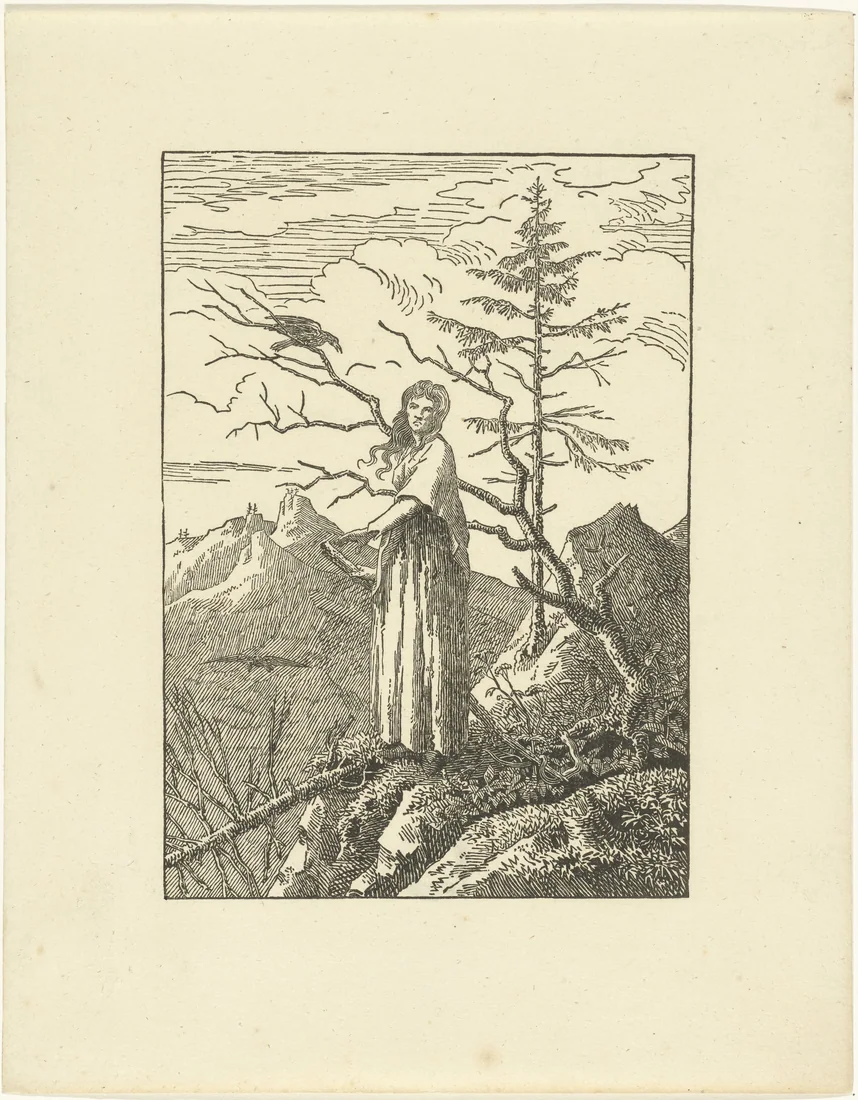
Woman Standing at the Edge of the Abyss and a Raven by Caspar David Friedrich – art print
Drawn to scale. Choose a size and frame to see it change.

Caspar David Friedrich

Woman Standing at the Edge of the Abyss and a Raven

art print

our suggestion 50 × 70 cm, Gallery box frame, natural wood

It is on warm, cream-coloured paper. Natural wood picks up that warmth; a white frame would make the paper look yellowed next to the white mount. At 50 × 70 cm the image is 40 × 60 cm inside the mount, large enough for the detail; at 30 × 40 cm it would be 20 × 30 cm. For a large wall, 70 × 100 cm.

Size
Finish
Frame colour

2 149 kr incl. VAT, delivery included

Size
Frame 50 × 70 cm (20 × 28 in), image 40 × 51 cm inside a 5 cm white mount
Paper
Matte fine art paper (Enhanced Matte Art), 200 g, printed to order
Framing
Assembled, with a 5 cm acid-free white mount. Frame sizes are the mount's outer size; the profile adds 2 cm on each side
Delivery
Included, 5–10 working days
Returns
14 days. Terms
Source
Rijksmuseum, Amsterdam

Got a frame already? The unframed print fits a standard frame size. A new picture for a frame you already have

About the work

Woman Standing at the Edge of the Abyss and a Raven (Vrouw staand aan de rand van de afgrond en raaf) is a work by Caspar David Friedrich. Caspar David Friedrich (1774–1840) was the leading German Romantic landscape painter, known for still, contemplative scenes of mountains, coasts and moonlight. The original is in the collection of Rijksmuseum, Amsterdam.

Caspar David Friedrich · Woman Standing at the Edge of the Abyss and a Raven · Romanticism

More: All Friedrich prints

Why it stays with you

Caspar David Friedrich drew this woodcut and his brother Christian, a cabinetmaker, cut the block. When Caspar David was thirteen, another brother drowned after going through the ice in front of him; tradition says he died trying to save Caspar David, but that is tradition, not record.

A woman holds on to a dead tree at the edge of a drop. Her hair and sleeves stream the same way as the dead branch points, so a still figure seems to sway. A raven sits right above her head, a snake crawls by her feet and the ground ends in front of her: you put the danger together before you have named it.

Small, black and white and calm on the surface, it holds a room the way a good short story does.

Sources: Rijksmuseum
More stories behind the paintings