Why it stays with you
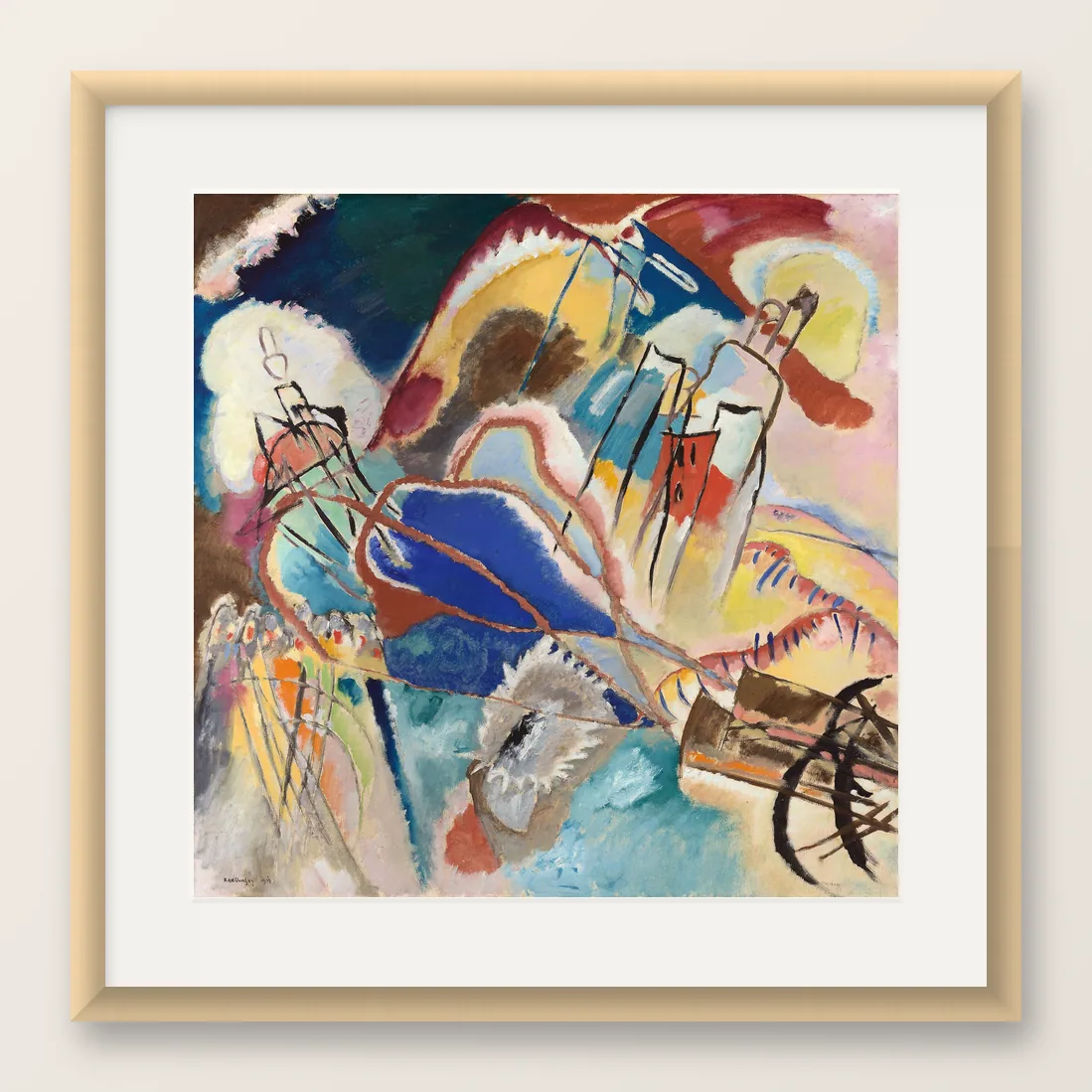
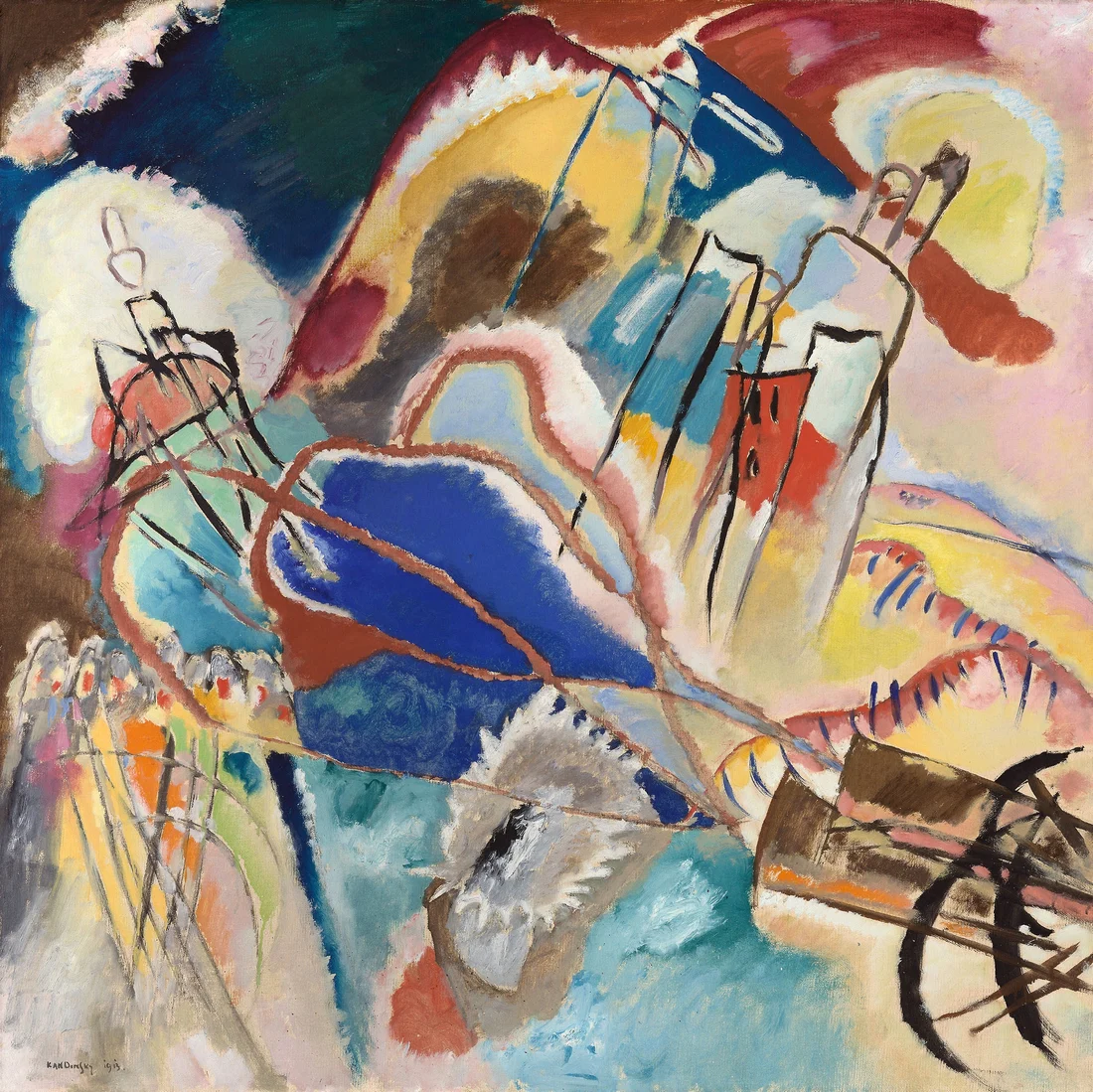
Kandinsky painted Improvisation No. 30 in 1913, a year before the First World War. He wrote to the collector Arthur Jerome Eddy that the cannons could probably be explained by the constant war talk of that year, but that the real content was what the viewer felt in the forms and colours. Calling it a prophecy is hindsight.
The recognisable things are small and pushed to the edge: two cannons, one of them smoking, leaning houses, a crowd. The middle is pure colour with no horizon. Once your eye has found the cannons, it starts to read smoke, falling and movement into the abstract fields.
You can live with it as colour every day, and see a picture of unease when you look closer. Few abstract paintings give you both.
Sources: Art Institute of Chicago