Shop · Kandinsky prints

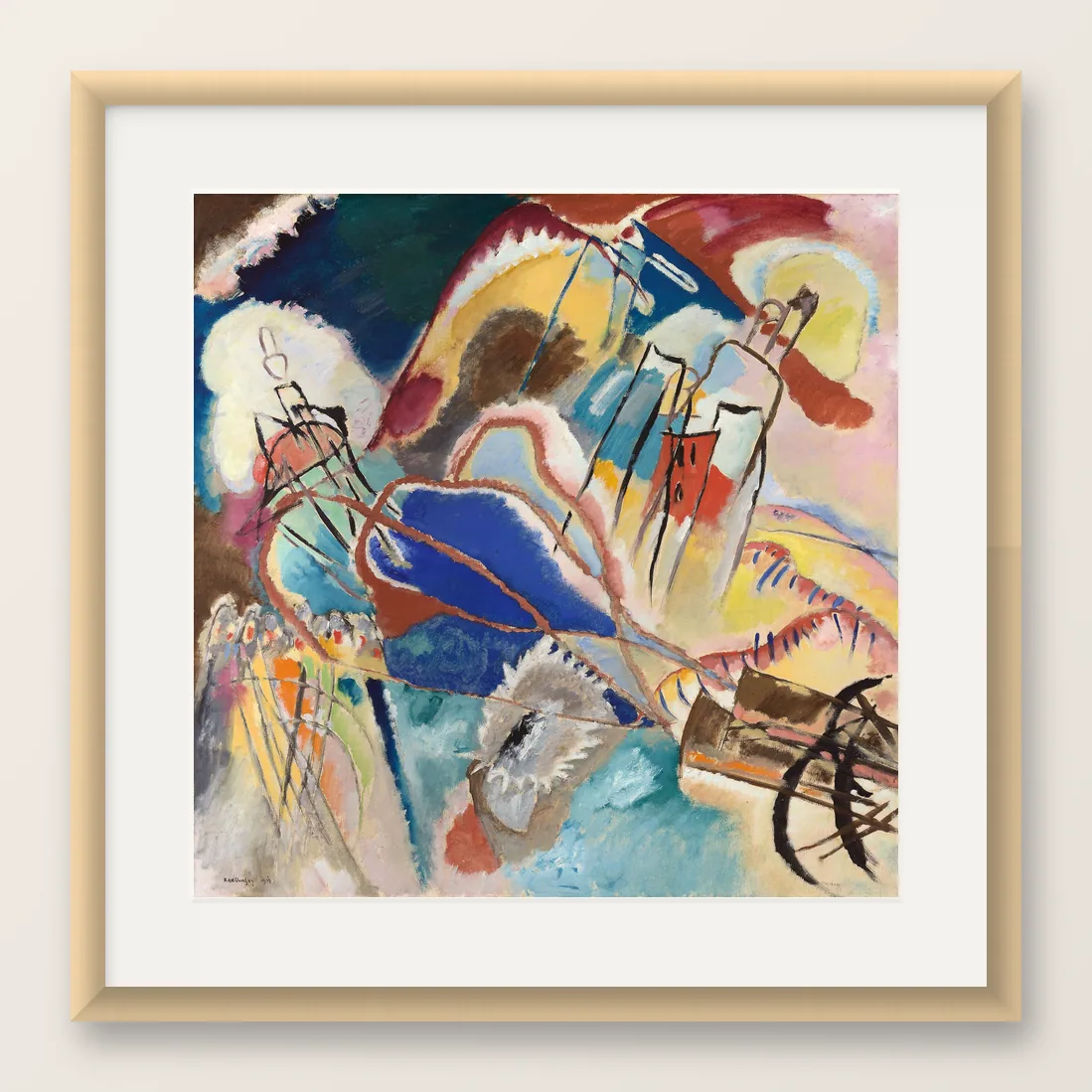
Improvisation No. 30 (Cannons) by Vasily Kandinsky as a framed print, natural wood frame and 5 cm white mount, drawn to scale
Drawn to scale: frame 50 × 50 cm, 5 cm white mount.

Vasily Kandinsky

Improvisation No. 30 (Cannons)

1913 · art print

our suggestion 50 × 50 cm, Gallery box frame, natural wood

A balanced, mid-toned palette: natural wood suits it and keeps it calm. The work is close to square, so 50 × 50 cm shows all of it with the least white border.

Size
Finish
Frame colour

1 749 kr incl. VAT, delivery included

See it on a wall

Size
Frame 50 × 50 cm (20 × 20 in), image 40 × 40 cm inside a 5 cm white mount
Paper
Matte fine art paper (Enhanced Matte Art), 200 g, printed to order
Framing
Assembled, with a 5 cm acid-free white mount. Frame sizes are the mount's outer size; the profile adds 2 cm on each side
Delivery
Included, 5–10 working days
Returns
14 days. Terms
Source
Art Institute of Chicago 1931.511 (Wikimedia Commons)

Got a frame already? The unframed print fits a standard frame size. A new picture for a frame you already have

About the work

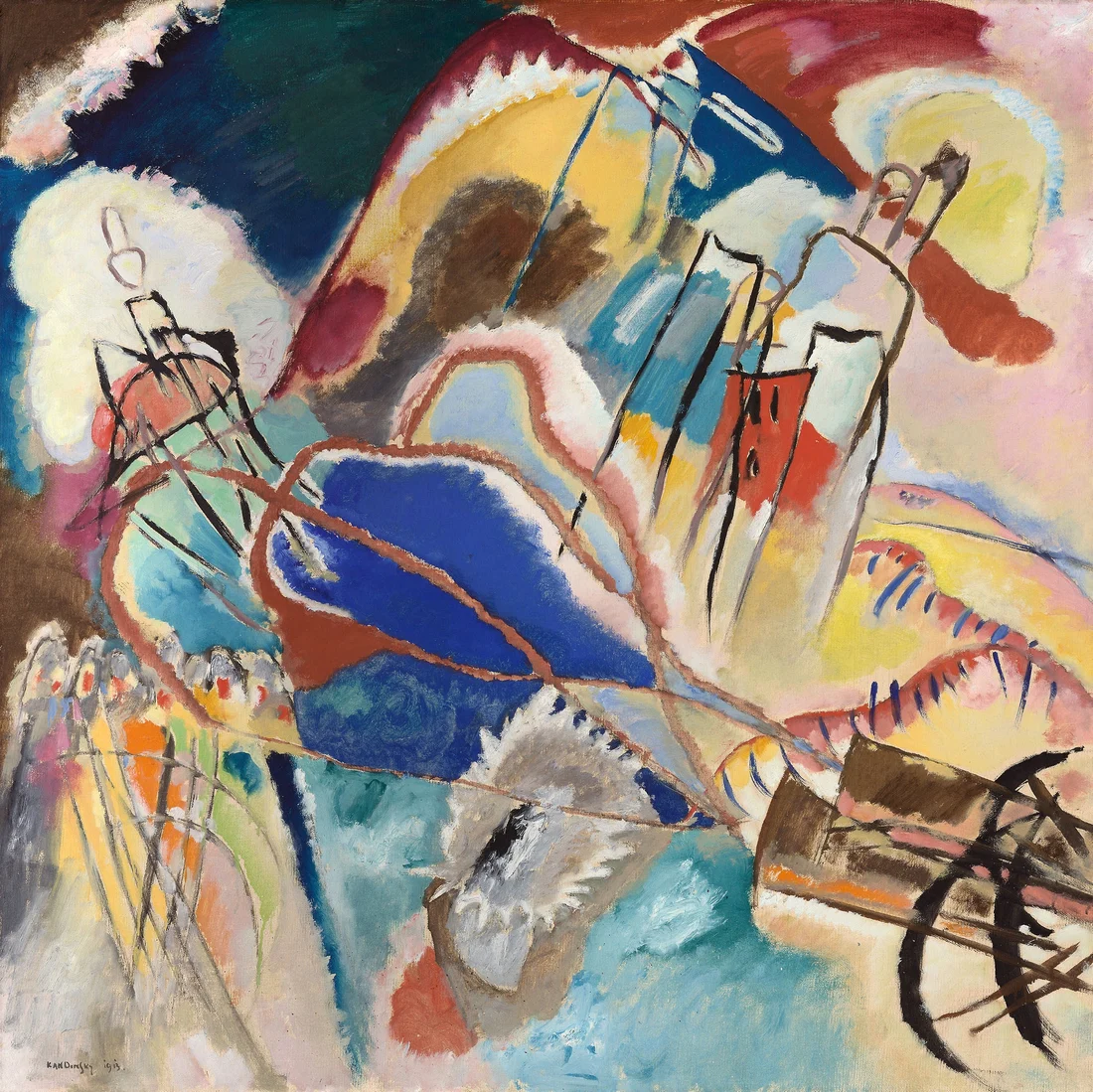
Improvisation No. 30 (Cannons) was painted by Vasily Kandinsky in 1913, the year he pushed furthest towards pure abstraction. Colours collide across the canvas in blues, reds, yellows and black, and in the lower right two cannons appear, a detail Kandinsky later said had entered the painting almost unconsciously in a year full of talk of war. The original, bought by the Chicago collector Arthur Jerome Eddy, is in the Art Institute of Chicago. As a square print it suits spots where a portrait format feels wrong: above a console, in a hallway, or in a grid with other square works.

Vasily Kandinsky · Improvisation No. 30 (Cannons) · 1913 · Oil on canvas · Abstract art

More: Kandinsky prints · Abstract art prints · Colourful wall art · Blue wall art

Why it stays with you

Kandinsky painted Improvisation No. 30 in 1913, a year before the First World War. He wrote to the collector Arthur Jerome Eddy that the cannons could probably be explained by the constant war talk of that year, but that the real content was what the viewer felt in the forms and colours. Calling it a prophecy is hindsight.

The recognisable things are small and pushed to the edge: two cannons, one of them smoking, leaning houses, a crowd. The middle is pure colour with no horizon. Once your eye has found the cannons, it starts to read smoke, falling and movement into the abstract fields.

You can live with it as colour every day, and see a picture of unease when you look closer. Few abstract paintings give you both.

Sources: Art Institute of Chicago
More stories behind the paintings