Shop · Klee prints

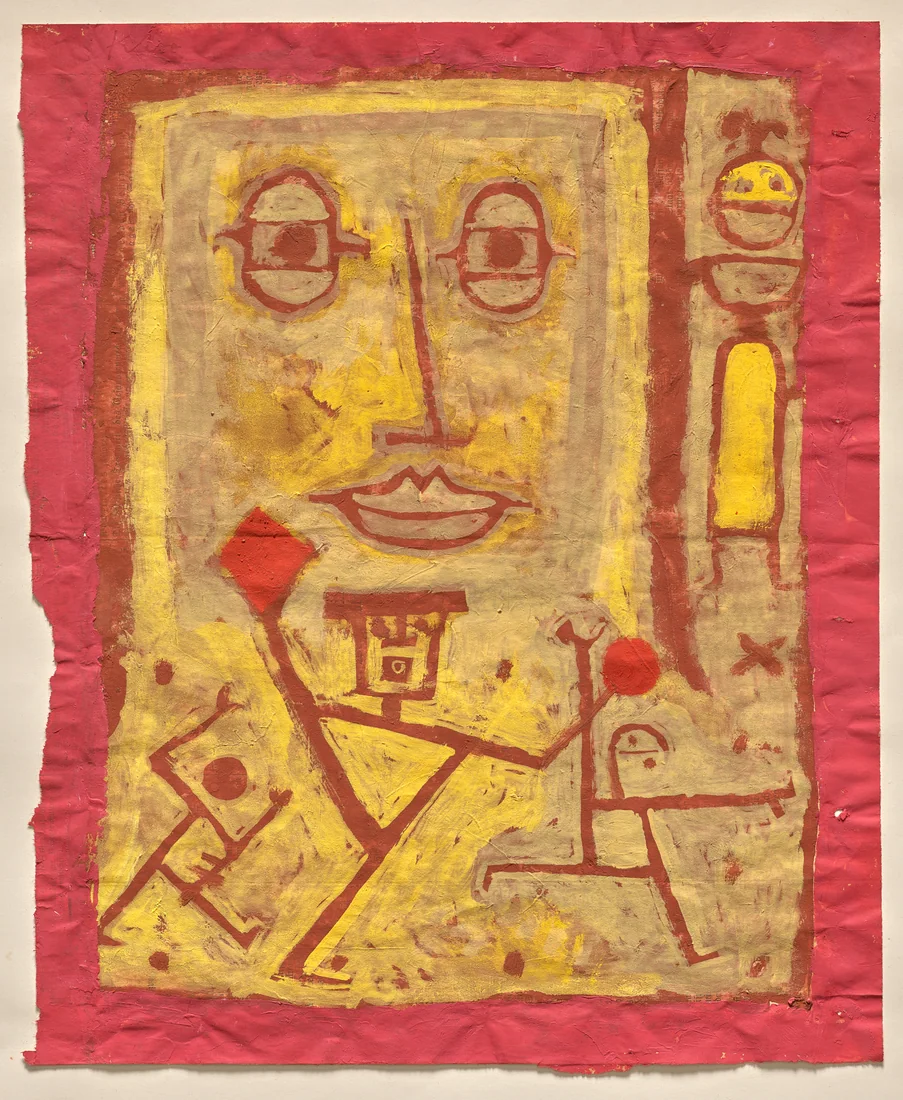
God of War by Paul Klee, 1937 – art print
Drawn to scale. Choose a size and frame to see it change.

Paul Klee

God of War

1937 · art print

our suggestion 50 × 70 cm, Gallery box frame, natural wood

The palette is warm: natural wood shares that warmth without competing with it. At 50 × 70 cm the image is 40 × 60 cm inside the mount, large enough for the detail; at 30 × 40 cm it would be 20 × 30 cm. For a large wall, 70 × 100 cm.

Size
Finish
Frame colour

2 149 kr incl. VAT, delivery included

Size
Frame 50 × 70 cm (20 × 28 in), image 40 × 49 cm inside a 5 cm white mount
Paper
Matte fine art paper (Enhanced Matte Art), 200 g, printed to order
Framing
Assembled, with a 5 cm acid-free white mount. Frame sizes are the mount's outer size; the profile adds 2 cm on each side
Delivery
Included, 5–10 working days
Returns
14 days. Terms
Source
Cleveland Museum of Art, 1992.278 (CC0)

Got a frame already? The unframed print fits a standard frame size. A new picture for a frame you already have

About the work

God of War is a gouache and tempera by Paul Klee, dated 1937. Paul Klee (1879–1940) was a Swiss-born artist who taught at the Bauhaus. His small, playful works explore colour, line and signs between figuration and abstraction. The original is in the collection of Cleveland Museum of Art.

Paul Klee · God of War · 1937 · Gouache and tempera · Expressionism

More: All Klee prints

Why it stays with you

Klee painted God of War in 1937 on a newspaper page about the Spanish Civil War. He had been dismissed from his teaching post in Düsseldorf in 1933, was living in Bern with a serious illness, and that year 102 of his works were seized from German museums.

A large pale face with oversized eyes looks straight out, framed in thick red, with three small figures drawn in red below it, and the newsprint shows through the paint. The eyes see you without caring, and the face lies over a war report, as if the news had been given a face.

From across a room it is bright and almost cheerful; up close it is much darker. That double reading is why people keep going back to it.

Sources: Cleveland Museum of Art · Deutsches Historisches Museum
More stories behind the paintings