Shop · Manet prints

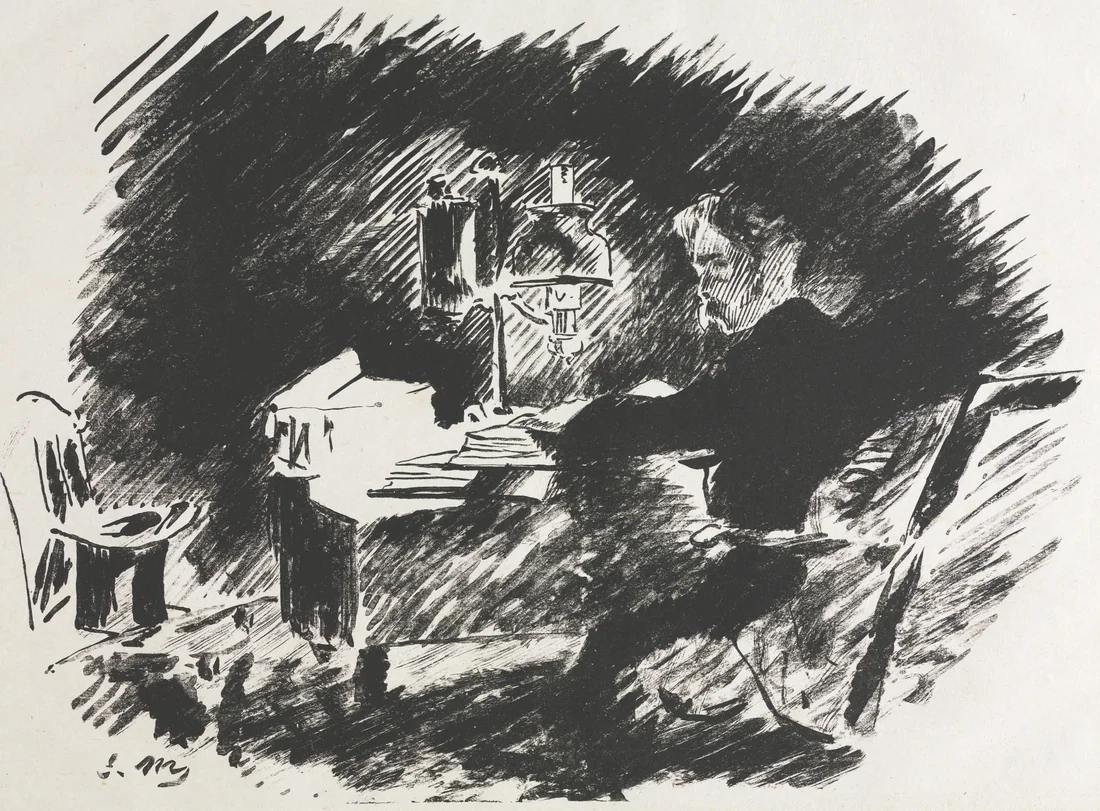
Illustration for The Raven by Edgar Allan Poe by Édouard Manet, 1875 – art print
Drawn to scale. Choose a size and frame to see it change.

Édouard Manet

Illustration for The Raven by Edgar Allan Poe

1875 · art print

our suggestion 70 × 50 cm, Gallery box frame, black

A work in black and grey: a black frame repeats its darkest tones and keeps it crisp. At 70 × 50 cm the image is 60 × 40 cm inside the mount, large enough for the detail; at 40 × 30 cm it would be 30 × 20 cm.

Size
Finish
Frame colour

2 149 kr incl. VAT, delivery included

Size
Frame 70 × 50 cm (28 × 20 in), image 54 × 40 cm inside a 5 cm white mount
Paper
Matte fine art paper (Enhanced Matte Art), 200 g, printed to order
Framing
Assembled, with a 5 cm acid-free white mount. Frame sizes are the mount's outer size; the profile adds 2 cm on each side
Delivery
Included, 5–10 working days
Returns
14 days. Terms
Source
Cleveland Museum of Art, 1921.381 (CC0)

Got a frame already? The unframed print fits a standard frame size. A new picture for a frame you already have

About the work

Illustration for The Raven by Edgar Allan Poe is a lithograph by Édouard Manet, dated 1875. Édouard Manet (1832–1883) painted modern Paris with a direct, flat touch that shocked the Salon. His work forms a bridge between Realism and Impressionism. The original is in the collection of Cleveland Museum of Art.

Édouard Manet · Illustration for The Raven by Edgar Allan Poe · 1875 · Lithograph · Impressionism

More: All Manet prints

Why it stays with you

In 1875 Manet and the poet Stéphane Mallarmé turned Edgar Allan Poe's The Raven into a luxury book, in a numbered edition signed by both; it was not a commercial success. This is the first plate, the poet at his table under the lamp.

There are almost no outlines. Quick strokes of ink thicken into black, and only the lamp is clearly drawn, so the picture is a dark field with one oval of light. The raven is there only as a bird-shaped shadow under the chair, which you see when you look for it.

Manet makes night out of almost nothing, and the fast brushwork keeps it alive. It belongs in a study or by a reading chair, where someone will one day find the shadow.

Sources: MoMA · Cleveland Museum of Art
More stories behind the paintings