Shop · Matisse prints

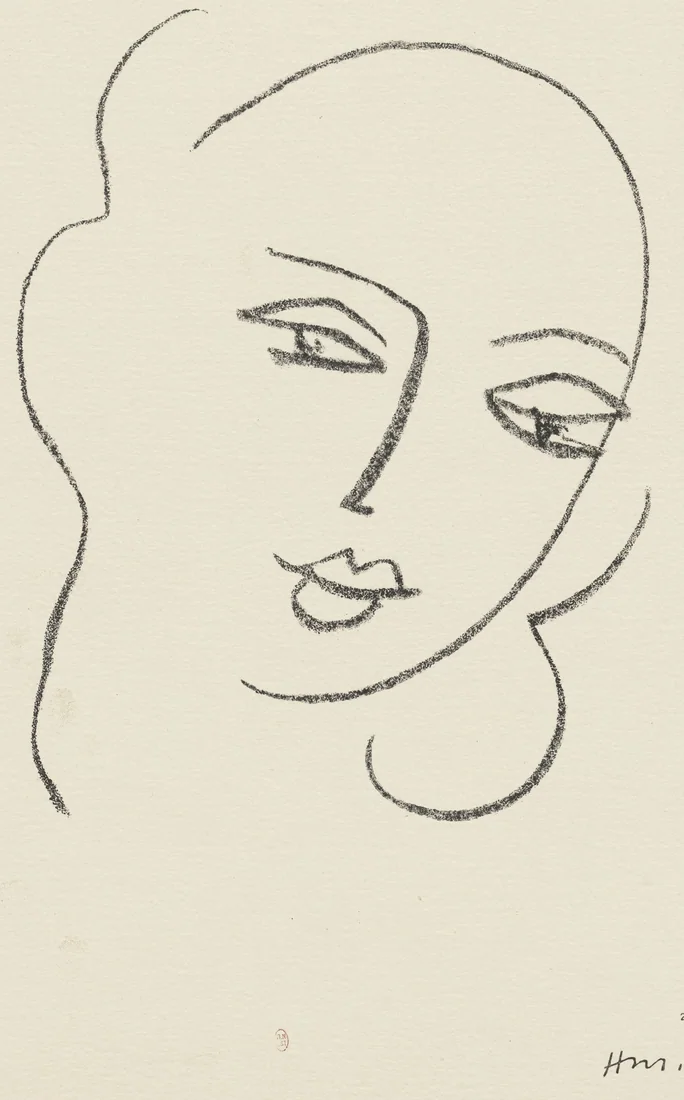
Study for the Virgin: Face (for the Vence Chapel) by Henri Matisse, between 1950 and 1951 – art print
Drawn to scale. Choose a size and frame to see it change.

Henri Matisse

Study for the Virgin: Face (for the Vence Chapel)

between 1950 and 1951 · art print

our suggestion 50 × 70 cm, Gallery box frame, white

A light, airy work: a white frame keeps it light and draws no attention to itself. At 50 × 70 cm the image is 40 × 60 cm inside the mount, large enough for the detail; at 30 × 40 cm it would be 20 × 30 cm. For a large wall, 70 × 100 cm.

Size
Finish
Frame colour

2 149 kr incl. VAT, delivery included

Size
Frame 50 × 70 cm (20 × 28 in), image 37 × 60 cm inside a 5 cm white mount
Paper
Matte fine art paper (Enhanced Matte Art), 200 g, printed to order
Framing
Assembled, with a 5 cm acid-free white mount. Frame sizes are the mount's outer size; the profile adds 2 cm on each side
Delivery
Included, 5–10 working days
Returns
14 days. Terms
Source
Bibliothèque nationale de France via Wikimedia Commons

Got a frame already? The unframed print fits a standard frame size. A new picture for a frame you already have

About the work

Study for the Virgin: Face (for the Vence Chapel) (Etude pour la Vierge "Visage" (pour la Chapelle de Vence)) is a work by Henri Matisse, dated between 1950 and 1951. Henri Matisse (1869–1954) led the Fauves and became one of the defining artists of the twentieth century, known for pure colour, rhythmic line and, late in life, his paper cut-outs. The original is in the collection of Bibliothèque nationale de France.

Henri Matisse · Study for the Virgin: Face (for the Vence Chapel) · between 1950 and 1951 · Fauvism

More: All Matisse prints

Why it stays with you

After his cancer operation in 1941, Matisse was nursed by Monique Bourgeois, who later became a Dominican nun in Vence. Through her he came to design a whole chapel, which he called his masterpiece and was too ill to see consecrated in 1951. He drew the figures at full size with charcoal tied to a bamboo stick.

This study is a face with almost nothing in it: almond eyes, a short line for the nose, no shading. The mind fills in what is missing, so the face looks calm to one person and sad to another.

One line on pale paper, the grammar of an icon without the gold: it suits a quiet wall. Museums list both a lithograph of 1950–51 and a later transfer printing, and which of them our image comes from is not certain.

Sources: Vatican Museums · National Gallery of Art
More stories behind the paintings