Shop · Morisot prints

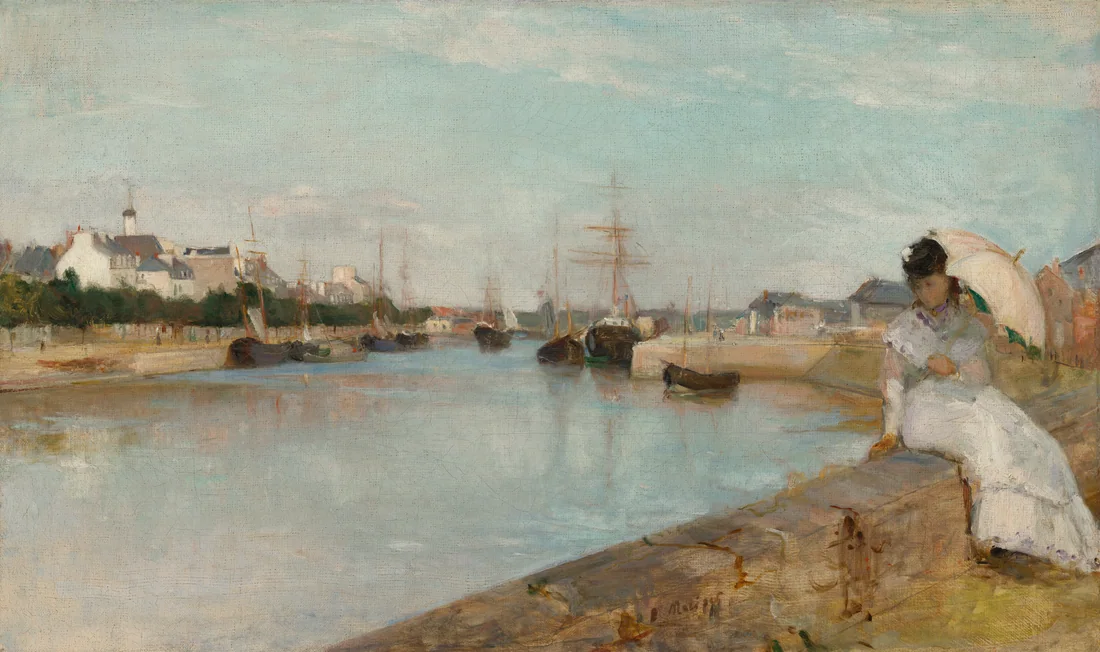
The Harbor at Lorient by Berthe Morisot, 1869 – art print
Drawn to scale. Choose a size and frame to see it change.

Berthe Morisot

The Harbor at Lorient

1869 · art print

our suggestion 70 × 50 cm, Gallery box frame, natural wood

A balanced, mid-toned palette: natural wood suits it and keeps it calm. At 70 × 50 cm the image is 60 × 40 cm inside the mount, large enough for the detail; at 40 × 30 cm it would be 30 × 20 cm. For a large wall, 100 × 70 cm.

Size
Finish
Frame colour

2 149 kr incl. VAT, delivery included

Size
Frame 70 × 50 cm (28 × 20 in), image 60 × 36 cm inside a 5 cm white mount
Paper
Matte fine art paper (Enhanced Matte Art), 200 g, printed to order
Framing
Assembled, with a 5 cm acid-free white mount. Frame sizes are the mount's outer size; the profile adds 2 cm on each side
Delivery
Included, 5–10 working days
Returns
14 days. Terms
Source
National Gallery of Art, Washington, 1970.17.48 (CC0)

Got a frame already? The unframed print fits a standard frame size. A new picture for a frame you already have

About the work

The Harbor at Lorient is an oil on canvas by Berthe Morisot, dated 1869. Berthe Morisot (1841–1895) was a founding member of the Impressionist group. Her quick, light brushwork caught domestic life, gardens and the people close to her. The original is in the collection of National Gallery of Art, Washington.

Berthe Morisot · The Harbor at Lorient · 1869 · Oil on canvas · Impressionism

More: All Morisot prints

Why it stays with you

In the summer of 1869 Berthe Morisot visited her sister Edma, newly married to a naval officer in Lorient. She painted Edma on the harbour wall and gave the picture to Édouard Manet the same year. Manet admired it and began to ask her advice, and it was later shown at the first Impressionist exhibition in 1874.

Edma sits at the lower right under a pink parasol, her face barely there, and the middle of the picture is empty water and light. The painting is about distance rather than about the person in it; reading it as two sisters being parted is tempting, but it is an interpretation.

Wide, pale and calm, it opens a wall the way a window does.

Sources: National Gallery of Art
More stories behind the paintings