Shop · Redon prints

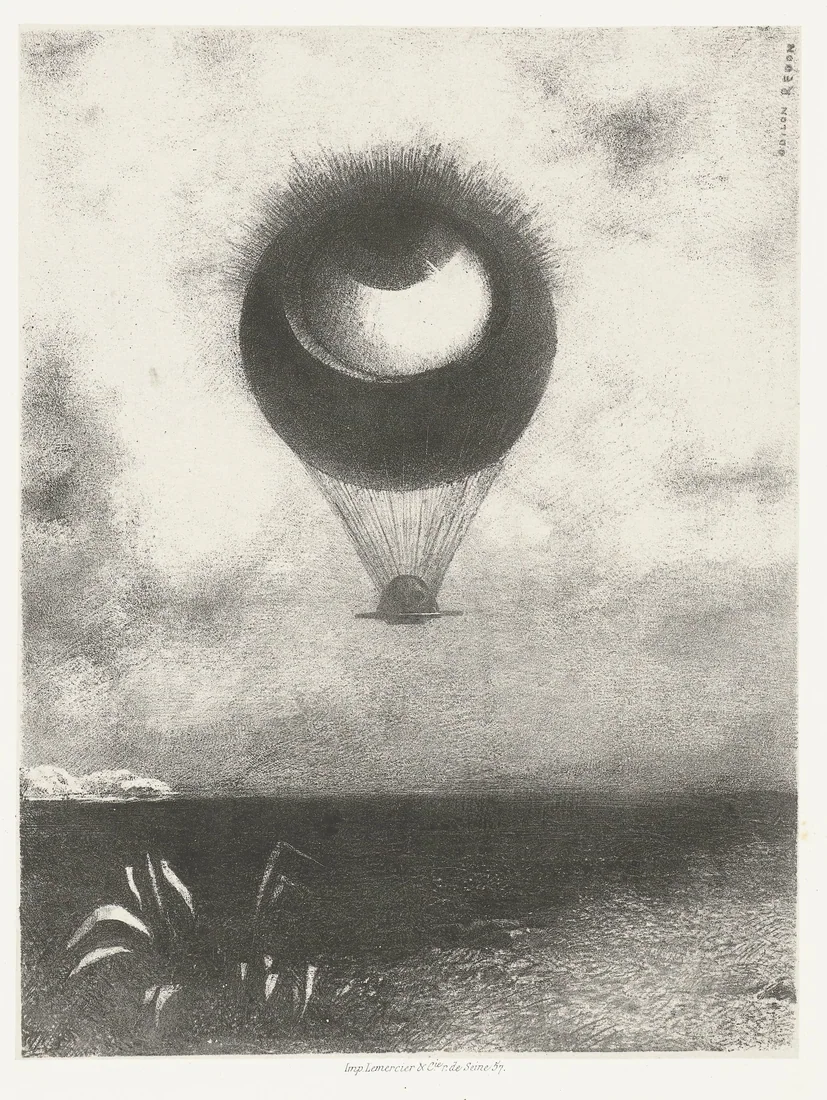
The Eye, Like a Strange Balloon, Mounts Toward Infinity by Odilon Redon – art print
Drawn to scale. Choose a size and frame to see it change.

Odilon Redon

The Eye, Like a Strange Balloon, Mounts Toward Infinity

art print

our suggestion 30 × 40 cm, Gallery box frame, black

Black and grey on light paper: a black frame repeats the darkest tones and keeps the work crisp. This work comes in 30 × 40 cm; framed, the image is 20 × 30 cm inside the mount.

Size
Finish
Frame colour

1 449 kr incl. VAT, delivery included

Size
Frame 30 × 40 cm (12 × 16 in), image 20 × 27 cm inside a 5 cm white mount
Paper
Matte fine art paper (Enhanced Matte Art), 200 g, printed to order
Framing
Assembled, with a 5 cm acid-free white mount. Frame sizes are the mount's outer size; the profile adds 2 cm on each side
Delivery
Included, 5–10 working days
Returns
14 days. Terms
Source
Rijksmuseum, Amsterdam

Got a frame already? The unframed print fits a standard frame size. A new picture for a frame you already have

About the work

The Eye, Like a Strange Balloon, Mounts Toward Infinity (L'oeil, comme un ballon bizarre se dirige vers l'infini) is a work by Odilon Redon. Odilon Redon (1840–1916) was a French Symbolist. He began with dark charcoal drawings and lithographs of dreamlike creatures, his 'noirs', and later turned to glowing pastels and paintings of flowers. The original is in the collection of Rijksmuseum, Amsterdam.

Odilon Redon · The Eye, Like a Strange Balloon, Mounts Toward Infinity · Symbolism

More: All Redon prints

Why it stays with you

In 1882 Odilon Redon published six lithographs dedicated to Edgar Allan Poe. They illustrate no text, and late in life Redon said the album was partly a move to make his name; the novelist Huysmans wrote that he had carried Poe's hallucinations into another medium.

An eye with fringed lashes hangs in the sky like a hot-air balloon, with a basket and a small head beneath it. A balloon and an eye were ordinary things in 1882; together they make an object that looks at us and drifts away at the same time. The small white reflection in the pupil is what makes it alive.

Black and white, quiet and a little funny, it is a strange picture that stays polite. People stop in front of it because they cannot quite say what it is.

Sources: Rijksmuseum · The Public Domain Review
More stories behind the paintings