Shop · Toulouse-Lautrec prints

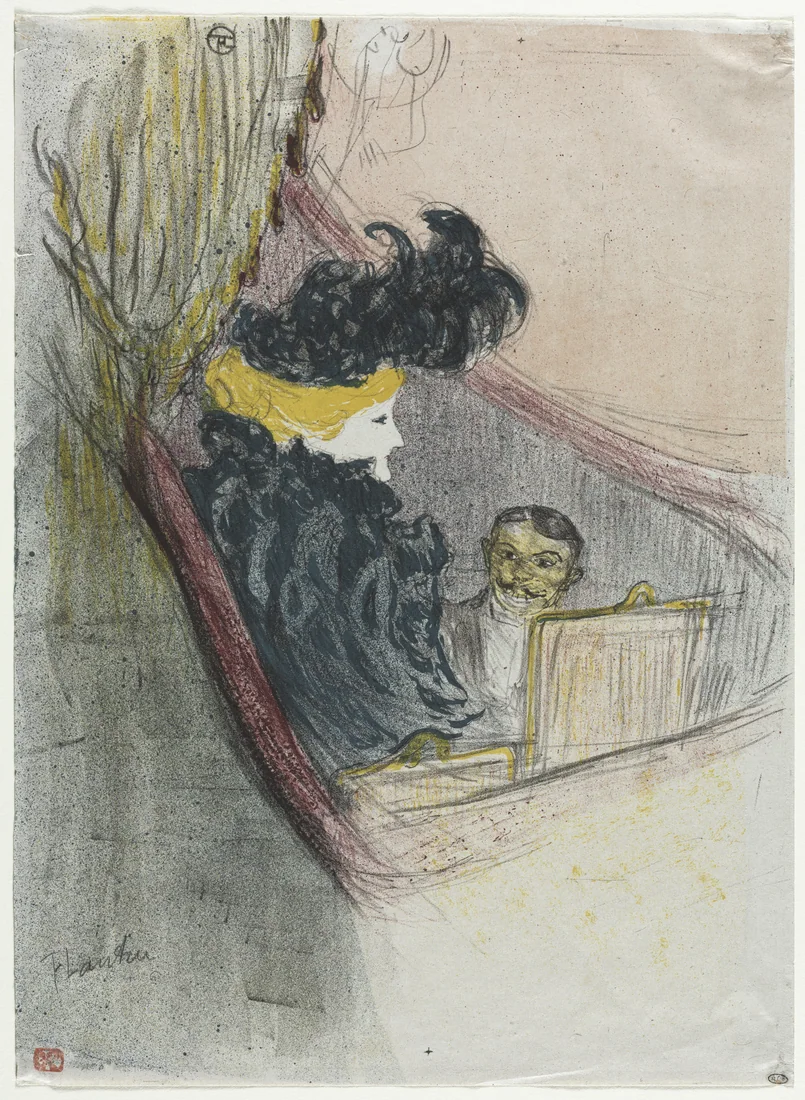
A Princely Idyl, Clara Ward by Henri de Toulouse-Lautrec, 1897 – art print
Drawn to scale. Choose a size and frame to see it change.

Henri de Toulouse-Lautrec

A Princely Idyl, Clara Ward

1897 · art print

our suggestion 50 × 70 cm, Gallery box frame, natural wood

A balanced, mid-toned palette: natural wood suits it and keeps it calm. At 50 × 70 cm the image is 40 × 60 cm inside the mount, large enough for the detail; at 30 × 40 cm it would be 20 × 30 cm. For a large wall, 70 × 100 cm.

Size
Finish
Frame colour

2 149 kr incl. VAT, delivery included

Size
Frame 50 × 70 cm (20 × 28 in), image 40 × 55 cm inside a 5 cm white mount
Paper
Matte fine art paper (Enhanced Matte Art), 200 g, printed to order
Framing
Assembled, with a 5 cm acid-free white mount. Frame sizes are the mount's outer size; the profile adds 2 cm on each side
Delivery
Included, 5–10 working days
Returns
14 days. Terms
Source
Cleveland Museum of Art, 1926.290 (CC0)

Got a frame already? The unframed print fits a standard frame size. A new picture for a frame you already have

About the work

A Princely Idyl, Clara Ward is a colour lithograph by Henri de Toulouse-Lautrec, dated 1897. Henri de Toulouse-Lautrec (1864–1901) drew the cafés, cabarets and dance halls of Montmartre. His colour lithographs and posters of performers such as Aristide Bruant, Jane Avril and Yvette Guilbert helped turn the poster into an art form. The original is in the collection of Cleveland Museum of Art.

Henri de Toulouse-Lautrec · A Princely Idyl, Clara Ward · 1897 · Colour lithograph · Post-Impressionism

More: All Toulouse-Lautrec prints

Why it stays with you

Clara Ward, an heiress from Detroit, married a Belgian prince at sixteen. In 1896 she ran away with the Hungarian violinist Rigó Jancsi, and Toulouse-Lautrec drew the couple in their box at the theatre, in an edition of only 16.

She is pale, flat and in profile under a huge black hat; he grows out of the grey shadow beside her, smiling. You look at her first, then at him, and then you realise you are in the next box, watching them like everyone else in Paris.

It is a picture about being looked at, and it still works that way on a wall. The dark red curtain and the yellow hair give a small room an evening in the city.

Sources: Kornfeld · Cleveland Museum of Art
More stories behind the paintings