Why it stays with you
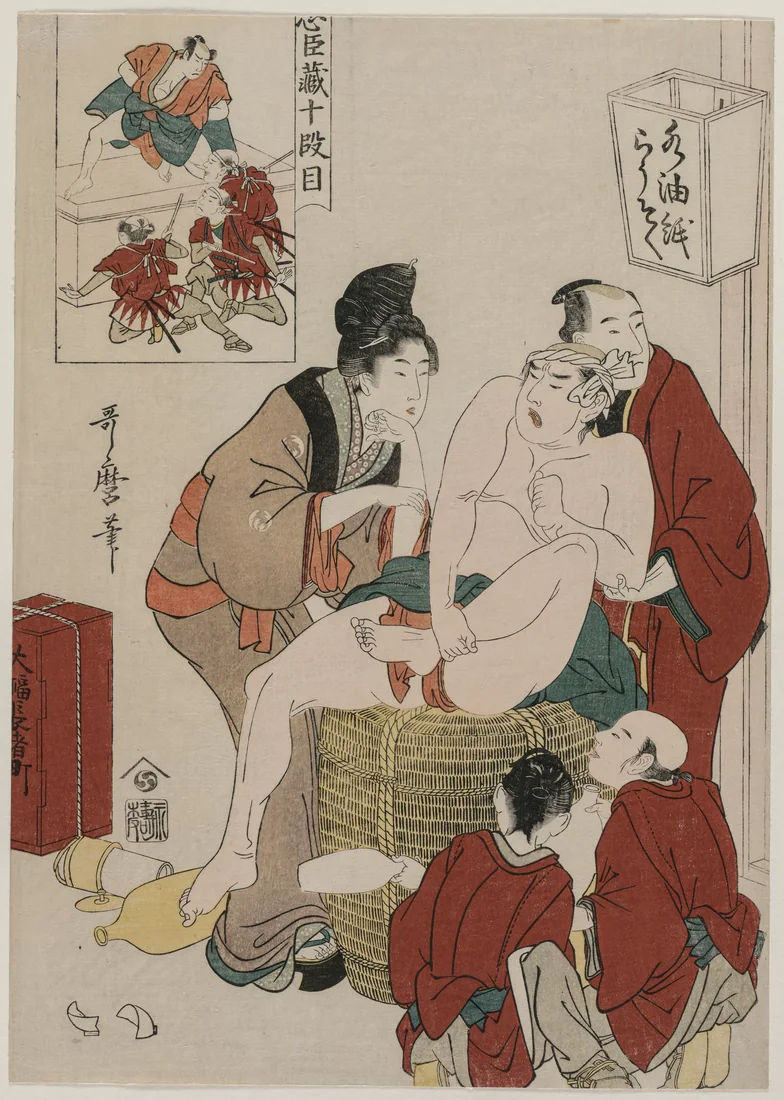
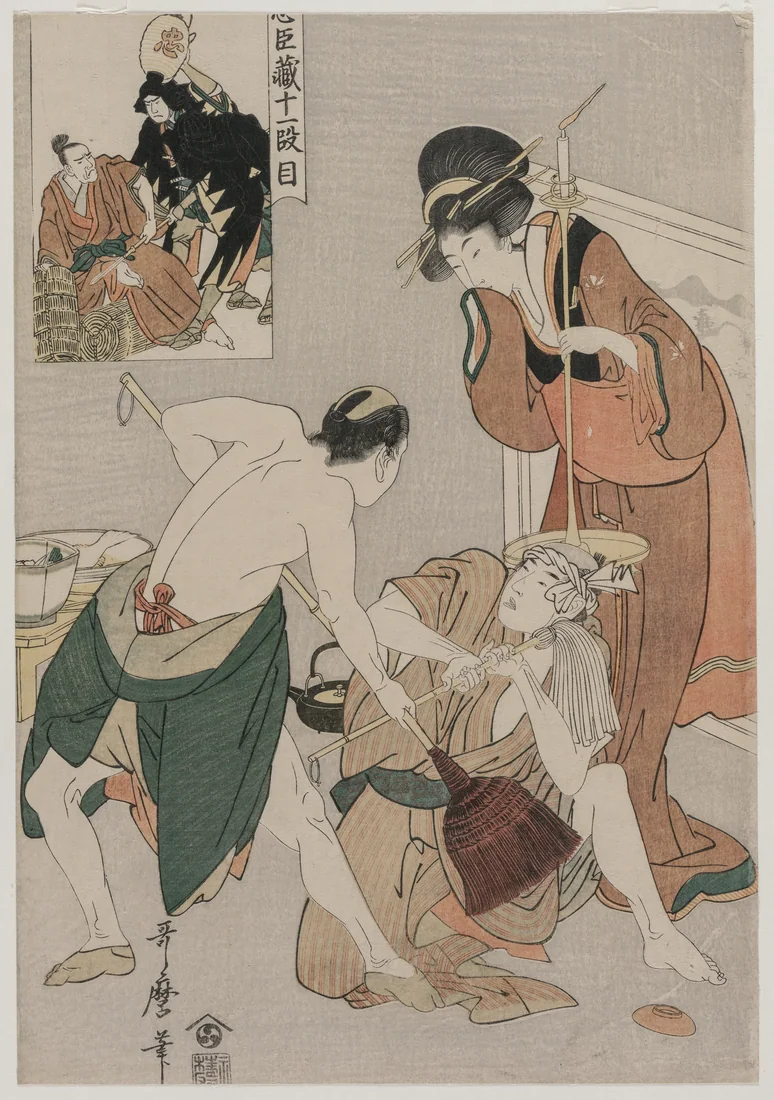
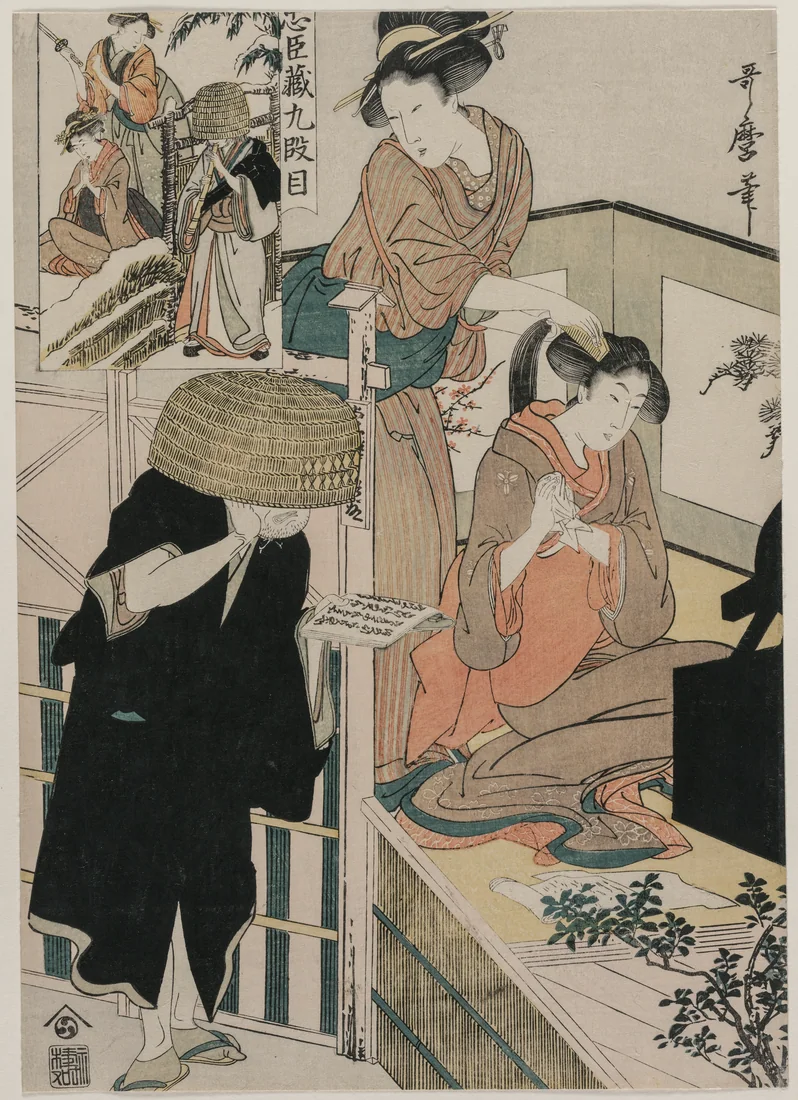
The story of the 47 rōnin, who avenged their lord in 1703, could not be staged under the real names, so the famous play moved it to the fourteenth century. Utamaro moved it again, into ordinary rooms: each sheet shows women in an everyday scene that rhymes with an act, with the stage scene in a small inset. Here, according to the museum, the mother who must kill her daughter becomes a mother brushing her daughter's hair.
The large picture is calm and beautiful, the inset violent. Your eye moves between them and finds the rhyme itself, the hairbrush answering the sword.
It works as a beautiful picture of two women, and as a riddle for anyone who looks at the corner. A few years later Utamaro was handcuffed for fifty days for another print.
Sources: Cleveland Museum of Art · The Metropolitan Museum of Art